The Vietnam War
This website hosts about 51 programs related to the Vietnam War. Most of these programs were recorded during the American upheaval over the war, in the mid-to-late 1960s. This was at the peak of controversy and protest. One of the programs focused on this war is selected randomly on the right side of this page. On this site, you’ll many key speakers represented, mostly as guests on radio programs.
To find all the Vietnam-related programs, go to our Audio Programs page and use the search system drop-downs:
Subject: look for Vietnam, War, or any other subject you wish.
Selected Speakers: find speakers like Andy Borg, Daniel Brewster, William Corson, Sanford Gottlieb, F. Edward Hebert, Hubert Humphrey, Pat Kawood, James Keys, Dean Kelly, David Kraslow. James Lawson, William Lederer, Stephen Ledogar, Stuart Loory, Don Luce, and John Mecklin.
Title: type in the word, Vietnam.
Description: type in the word, Vietnam.
The Vietnam War, as it was known in the U.S, occurred in Vietnam, Laos, and Cambodia from November 1, 1955 to the fall of Saigon on April 30, 1975.
During the course of the Vietnam War, a large segment of the American population came to be opposed to U.S. involvement in South Vietnam. Public opinion steadily turned against the war following 1967 and by 1970 only a third of Americans believed that the U.S. had not made a mistake by sending troops to fight in Vietnam.
Direct U.S. military involvement ended on August 15, 1973. The capture of Saigon by the North Vietnamese Army in April 1975 marked the end of the war, and North and South Vietnam were reunified the following year.
Randomly-chosen Vietnam War-Related Program:
Eugene Carson Blake interviewed by R. W. Bauer
Speaker(s): Eugene Carson Blake, Richard Waldron Bauer (interviewer)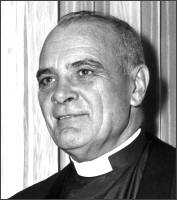 Description: This interview of Eugene Carson Blake (1906-1985) was conducted as part of Richard Bauer's preparation of the report "An Historical Study of Past Denominational Responses to Social, Political and Economic Crises." Recorded at the 194th General Assembly of The United Presbyterian Church in the U.S.A. General Assembly. The Rev. Dr. Eugene Carson Blake was an American Presbyterian Church leader. From 1954 to 1957, he served as president of the National Council of Churches in the United States. From 1966 to 1972, he served as General Secretary of the World Council of Churches. He saw racism as a sin and and a force of evil in the world. The original recording was on audiocassette. The first tape was turned over at 31:15 and the second tape started at 1:02:27.
Length: 1:10:35
Recording Date: 1982
Recorded at: Hartford, Connecticut